Coreset-Induced Conditional Velocity Flow Matching
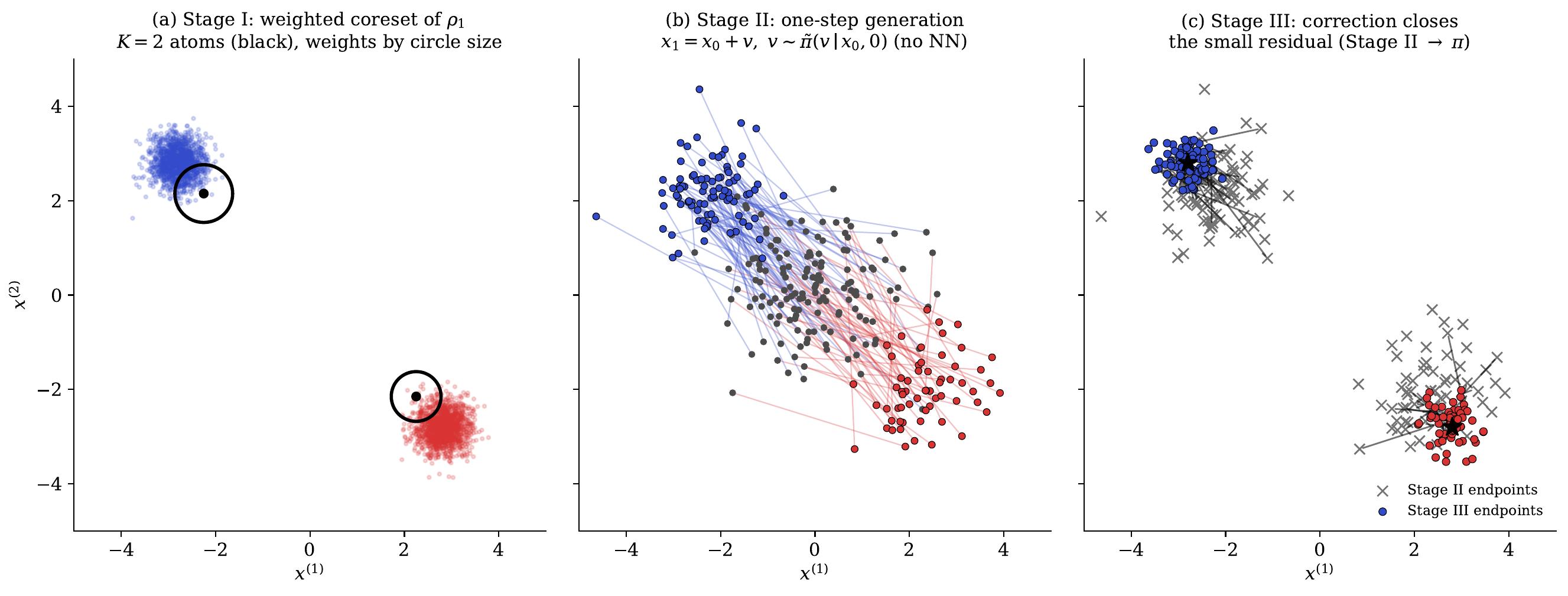
Hierarchical flow matching models the full conditional law of the velocity, but its inner flow starts from pure Gaussian noise and must learn an entire noise-to-data transport. CCVFM starts that inner flow from a closed-form coreset of the data instead, so the network only has to learn a small correction.
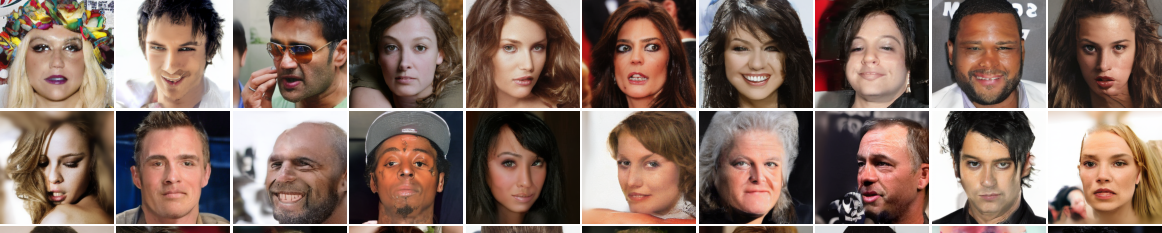
We propose Coreset-Induced Conditional Velocity Flow Matching (CCVFM), a generative model that augments hierarchical rectified flow with a data-informed source distribution. CCVFM first compresses the target into weighted atoms using an entropic Sinkhorn coreset and lifts them to a Gaussian mixture. The induced conditional velocity law is then a closed-form Gaussian mixture that can be sampled without a learned neural sampler. A lightweight correction flow, trained from this surrogate source, refines the remaining surrogate-to-target residual rather than learning an entire noise-to-data map. We prove that the surrogate transport cost equals the target–surrogate Wasserstein gap under an explicit compression assumption, whereas the noise-source analogue has a dimension-scale lower bound. On MNIST, CIFAR-10, ImageNet-32 and CelebA-HQ 256, CCVFM reaches competitive few-step generation under matched architectures.
Three stages, and only the last one is learned
Compress the data, then lift to a mixture
An entropic-Sinkhorn coreset summarises the data by K weighted atoms. Closed-form probabilistic PCA lifts each atom to a Gaussian N(μk, LkLk⊤+σ²I), giving the surrogate ρ̃1.
No network · 95 s for CIFAR-10 at K = 10,000Read off the velocity law, no training
Plugging ρ̃1 into the conditional velocity identity gives an explicit K-component mixture π̃(v | xt, t). At t = 0 it is ρ̃1(x0+v): one categorical draw and one Gaussian draw.
No network · one closed-form drawLearn only the residual
A correction network is trained by flow matching in velocity space, with the source drawn from π̃ and anchored to the mixture component of each training image. It refines a surrogate-to-target residual, not a noise-to-data map.
The only learned part · L Euler steps at samplingStrong few-step generation from a better source
All four numbers use 51 function evaluations (50 correction steps plus the closed-form draw) and no classifier-free guidance.
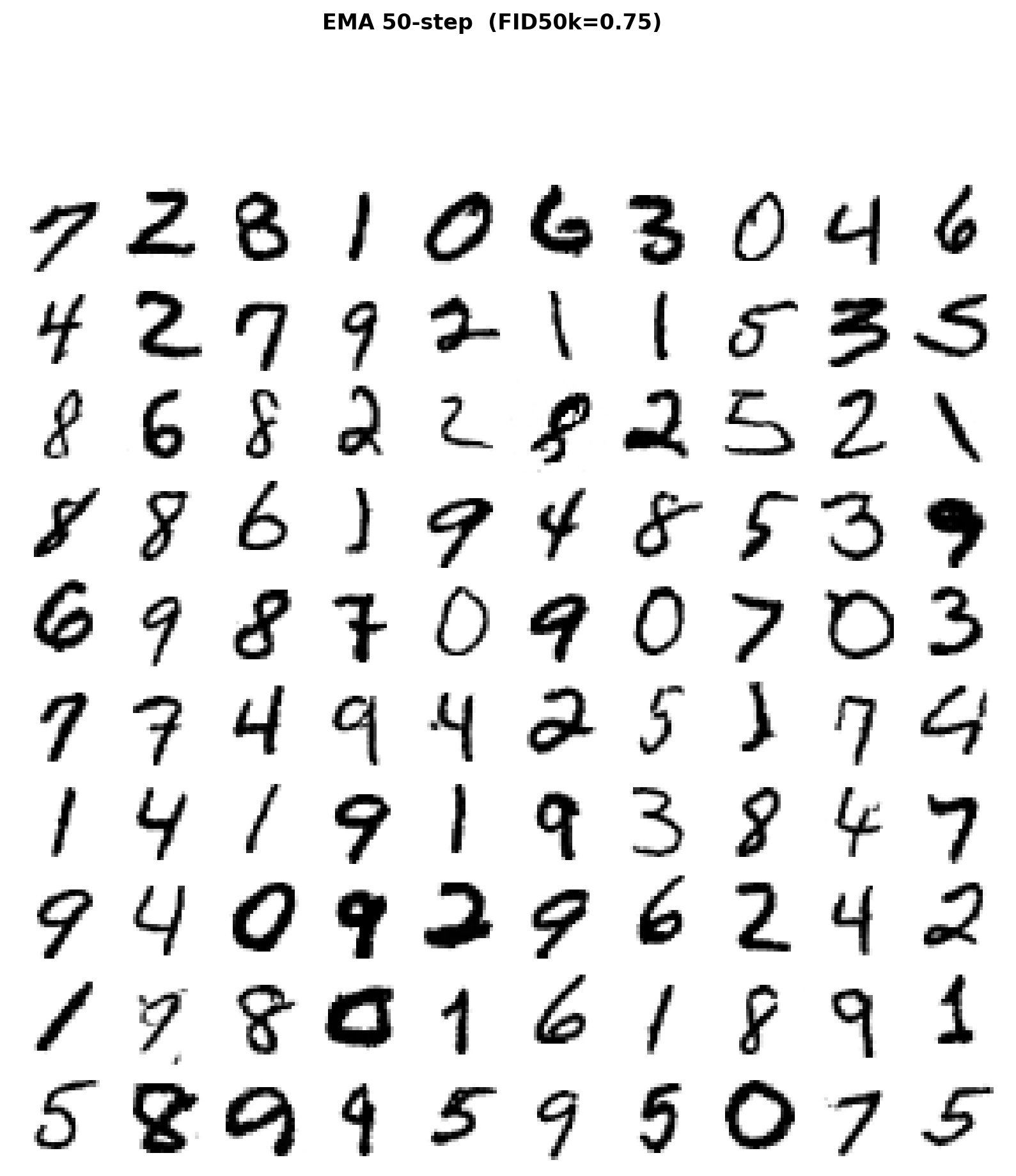
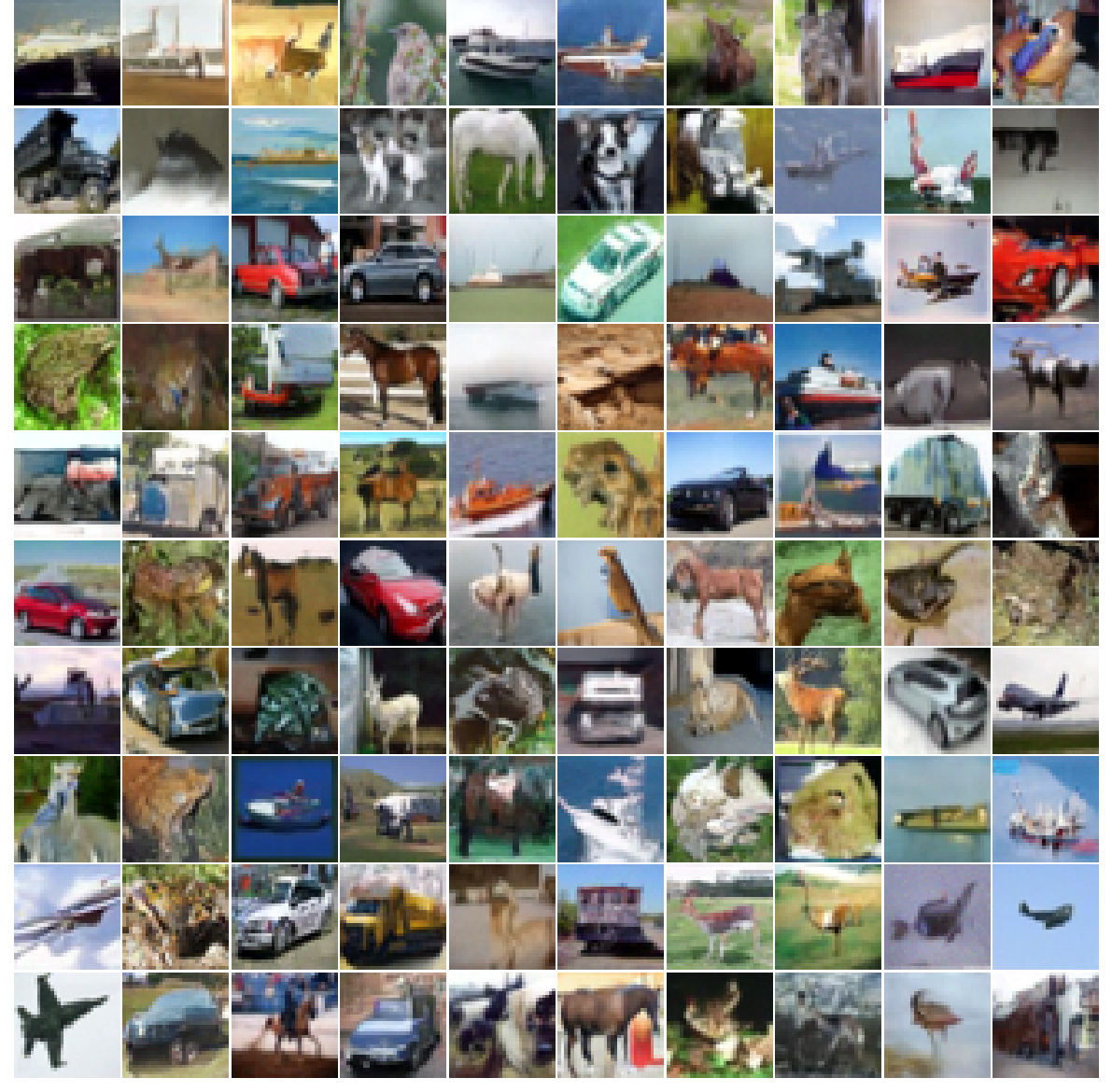
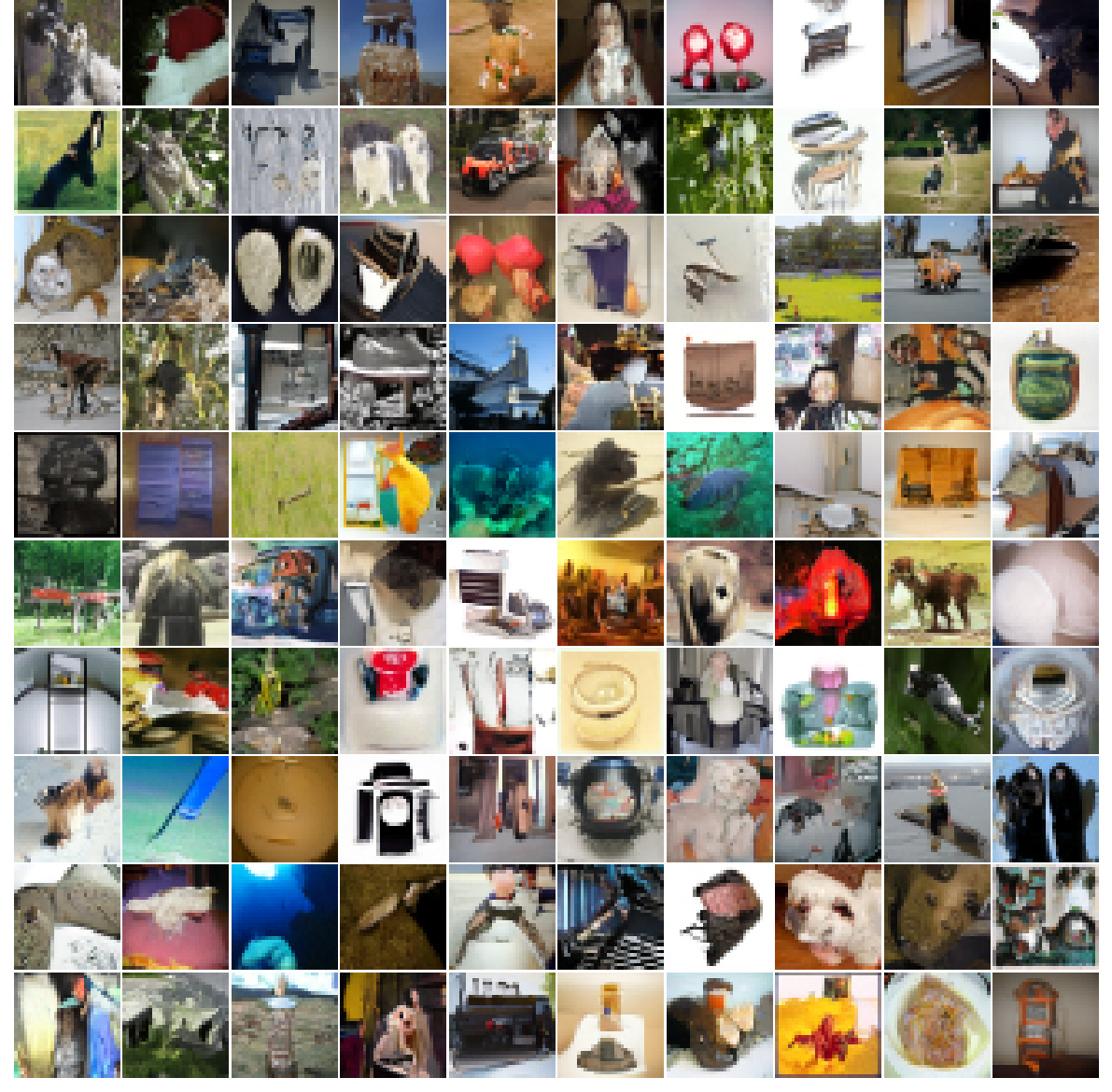
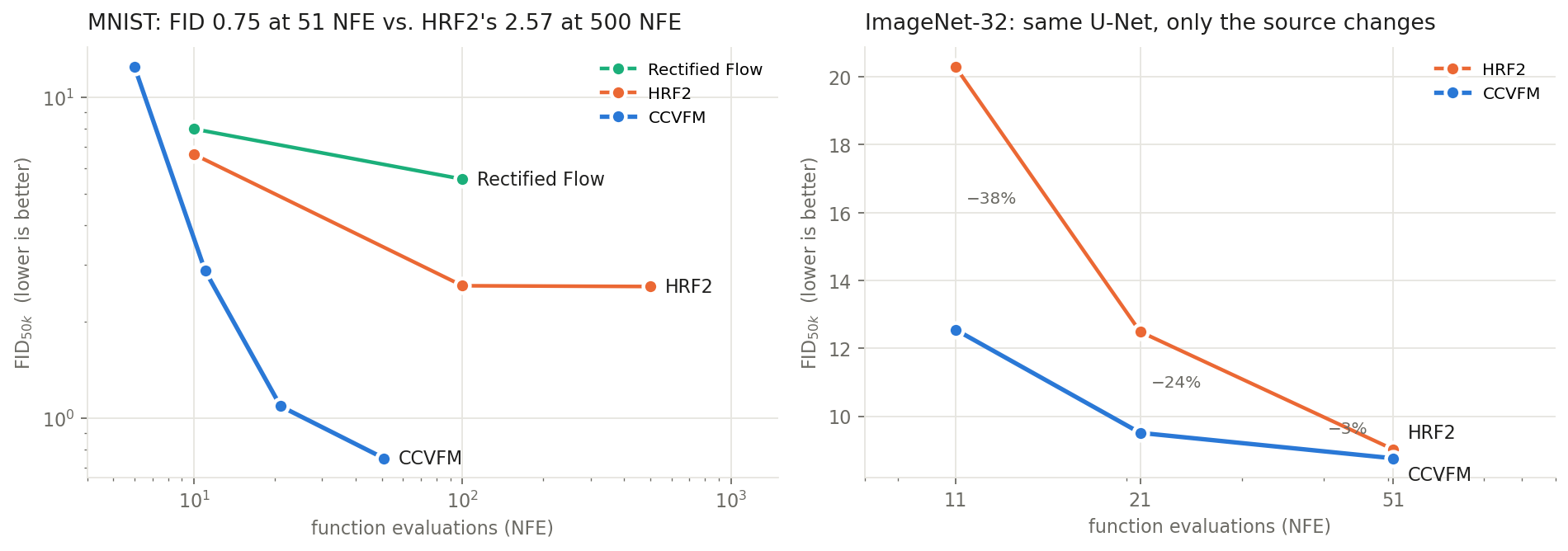
The source is what matters
Same correction U-Net, same Stage III budget (80k steps) on MNIST. The only change is where the inner flow starts.
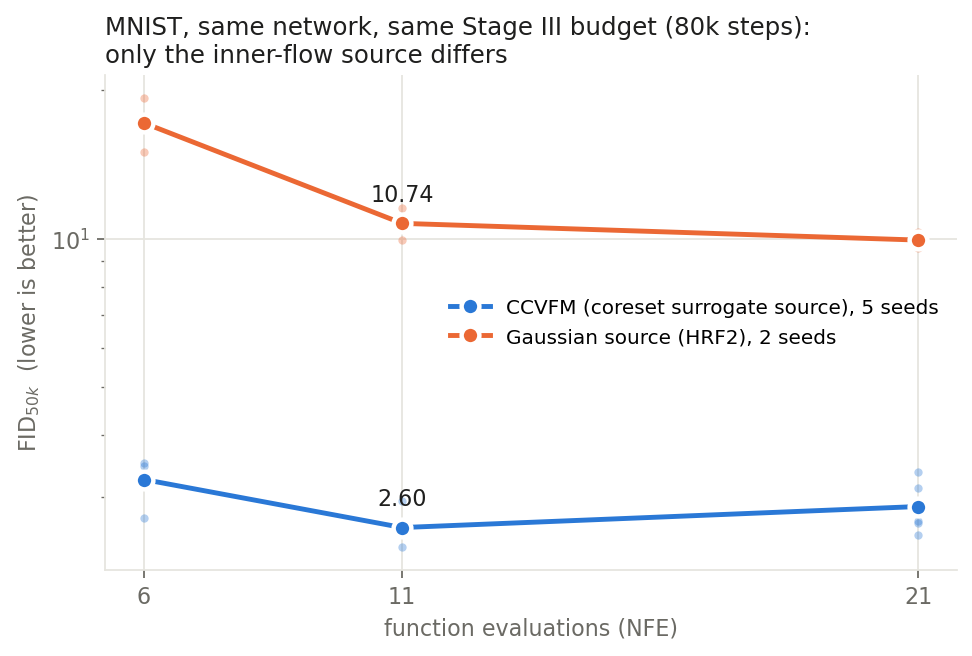
| Inner-flow source | 6 NFE | 11 NFE | 21 NFE |
|---|---|---|---|
| Gaussian N(0, I) (HRF2), 2 seeds | 17.17 | 10.74 | 9.94 |
| Coreset surrogate (CCVFM), 5 seeds | 3.25 ± 0.31 | 2.60 ± 0.22 | 2.86 ± 0.36 |
FID50k, lower is better. Theorem 3 explains the gap: the surrogate source leaves only a surrogate-to-target residual to learn (see the checks below).
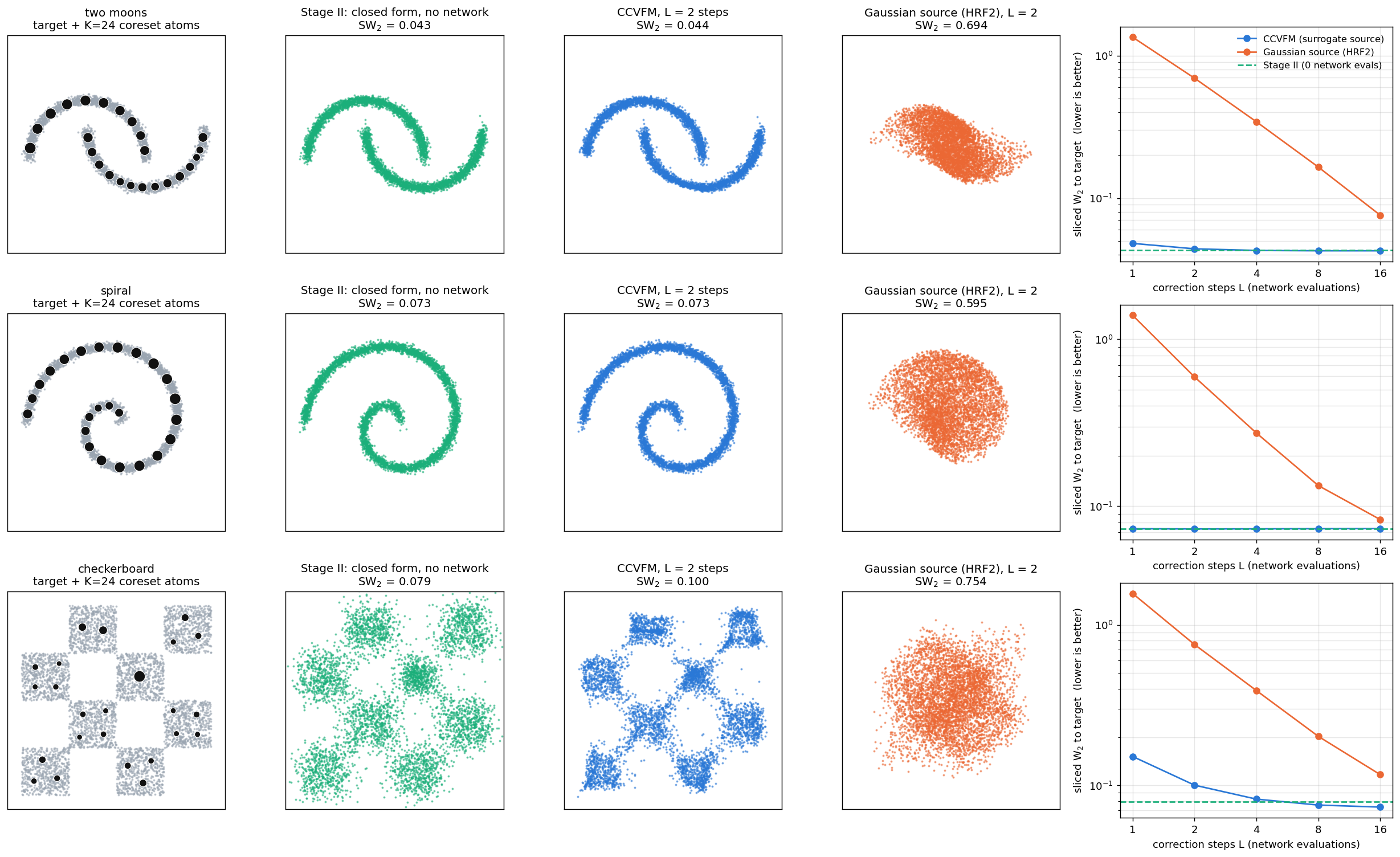
python examples/toy2d.py.Checks added during peer review
Experiments from our public responses to the NeurIPS 2026 reviewers. Lightweight budgets, so absolute values are not comparable to the main tables. Code: experiments/rebuttal/.
Both identities of Theorem 3 hold numerically
| Dataset (d) | Surrogate | Thm 3(i) | Gaussian | Thm 3(ii) | Ratio |
|---|---|---|---|---|---|
| ring-6 (2) | 8.171 | 8.158 | 8.088 | 8.074 | 1.0 |
| moons (2) | 9.400 | 9.426 | 9.618 | 9.618 | 1.0 |
| pinwheel (2) | 4.993 | 4.988 | 6.508 | 6.486 | 1.3 |
| checkerboard (2) | 5.307 | 5.318 | 6.683 | 6.672 | 1.3 |
| helix (3) | 4.668 | 4.677 | 8.344 | 8.344 | 1.8 |
| MNIST (784) | 105.5 | 105.4 | 1655.2 | 1655.6 | 15.7 |
| CIFAR-10 (3072) | 1528.4 | 1523.2 | 6929.2 | 6929.0 | 4.5 |
Monte-Carlo estimates of E‖V1−V0‖² at t = 0 agree with both closed forms to 0.03–0.3%. On images the surrogate source shrinks the regression target 16× (MNIST) and 4.5× (CIFAR-10).
The low-rank covariance saturates near r = 50
| r | 6 NFE | 11 NFE | 21 NFE |
|---|---|---|---|
| 10 | 3.18 | 3.47 | 4.35 |
| 30 | 3.25 | 2.60 | 2.86 |
| 50 | 3.14 | 2.38 | 2.60 |
| 200 | 3.22 | 2.36 | 2.64 |
| 784 | 2.90 | 2.40 | 2.82 |
MNIST FID50k, mean over 3 training seeds (5 for r = 30).
Compression follows an effective dimension
| Target | Slope in K | Reading |
|---|---|---|
| thin circle | −0.503 | K−1/2 |
| two moons | −0.467 | K−1/2 |
| helix (3D) | −0.44 | steeper than −1/3 |
| MNIST | −0.162 | deff ≈ 12 |
| CIFAR-10 | −0.136 | deff ≈ 15 |
Sliced W2 on low-dimensional targets; transport-cost proxy on images (nominal d = 784 / 3072).
- A KDE source (K = n) loses the low-NFE regime: FID 68–82 at 6 NFE, seed-unstable at 21 NFE (2.1 vs 34.9), and samples sit 13% closer to training than to held-out data, against 5% for the coreset surrogate.
- Stage I is cheap: 10 s on MNIST (K = 2,000), 95 s on CIFAR-10 (K = 10,000) and 350 s on all 1.28M ImageNet-32 images (K = 5,000) on one GPU, under 1% of training time.
- Error bars: 5 sampling seeds give MNIST FID50k 0.772 ± 0.011 at 51 NFE; re-training with a new seed gives 0.747.
Why a coreset source helps
- Transport-task reduction. At the generation boundary, the task left to the correction network is exactly the surrogate gap W2(ρ1, ρ̃1), which is O(K−1/d) under the Stage I compression assumption. With a Gaussian source the same task is bounded below by √d(√(σ1²+1)−1), a constant however large K or n is.
- Fewer Euler steps. The number of Euler steps needed for a given discretisation error scales with the square of that task size, so a smaller surrogate gap directly buys lower NFE.
- A smaller regression target. The conditional second moment of V1−V0 under the surrogate source depends on within-mode quantities; the Gaussian source pays the cross-mode diameter plus d.
BibTeX
@inproceedings{she2026ccvfm,
  title     = {Coreset-Induced Conditional Velocity Flow Matching},
  author    = {She, Zihua and Su, Jianxi and Wang, Xiao},
  booktitle = {Advances in Neural Information Processing Systems (NeurIPS)},
  year      = {2026},
  note      = {arXiv:2605.12951}
}